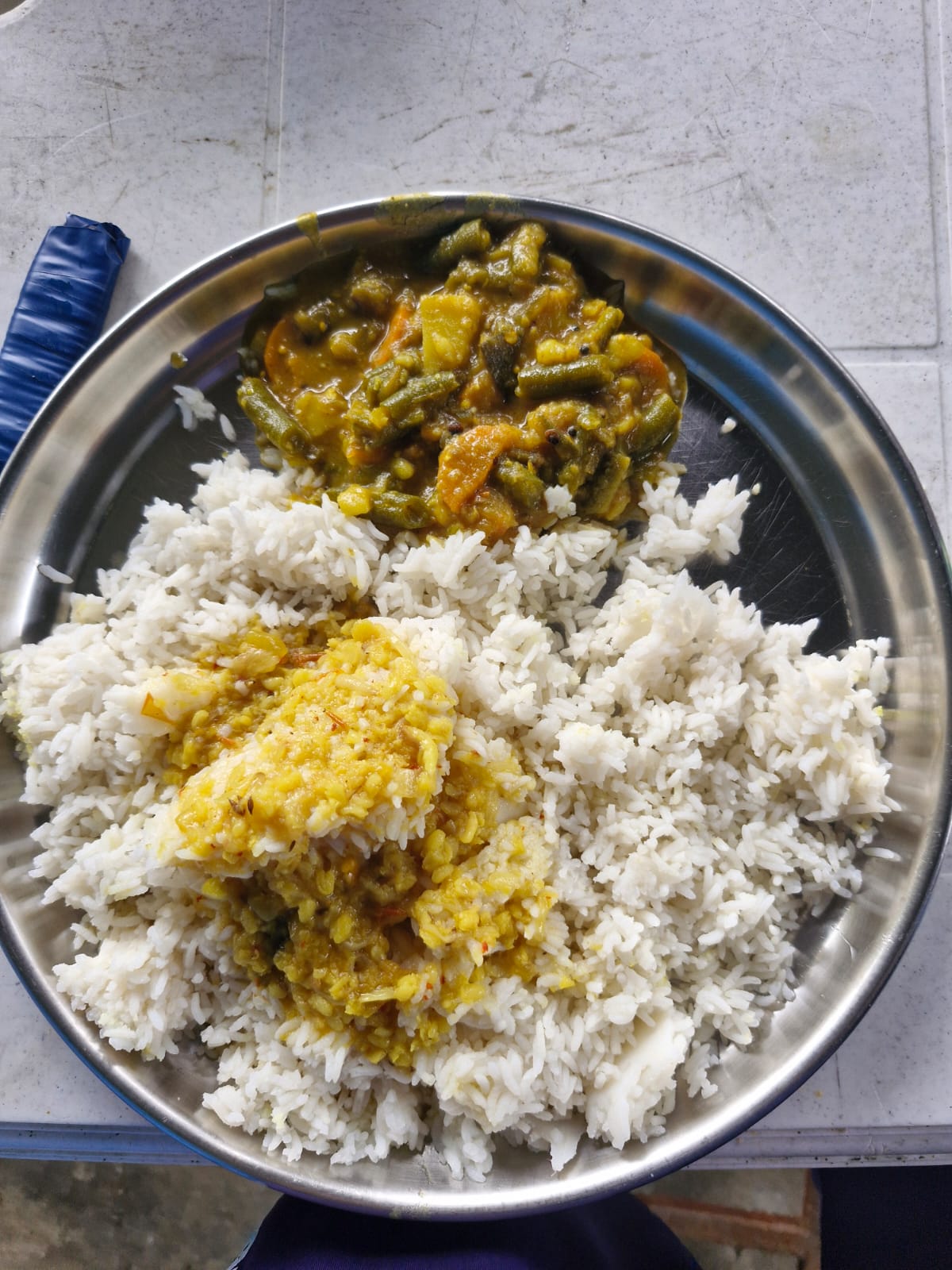
09-08-2025
THIS IS AN ONLINE E LOG BOOK TO DISCUSS OUR PATIENT'S DE-IDENTIFIED HEALTH DATA SHARED AFTER TAKING HIS SIGNED INFORMED CONSENT. HERE WE DISCUSS OUR PATIENT'S PROBLEMS THROUGH SERIES OF INPUTS FROM AVAILABLE GLOBAL ONLINE COMMUNITY EXPERTS WITH AN AIM TO SOLVE THOSE PATIENT'S CLINICAL PROBLEMS WITH COLLECTIVE CURRENT BEST EVIDENCE BASED INPUTS.
[09-08-2025 11.29] PPM 1: 

[09-08-2025 11.34] PPM 1: @PPM3 @PPM4 awaiting your history magic on this patient too.
[09-08-2025 11.34] PPM 1: @PPM3 @PPM4 awaiting your history magic on this patient too.
What is unique about this one is that in spite of a scope not negotiable gastric outlet obstruction, the patient improved on pantoprazole and ondansetron and stopped vomiting after 5 days but recurred after four days of stopping the pantoprazole and ondansetron.
We thought his gastric outlet obstruction may have healed and planned a repeat upper GI endoscopy to see if we can now negotiate our way into the duodenum easily but before that yesterday our radiology while doing his ultrasound noticed a very dilated stomach!


[11-08-2025 10:22] PA: Ajkar date chuti diye endoscopy likhe din amra hyderabad theke endoscopy karia apnader dekhabo sir (chuti 2ta patient ke karben sir
[11-08-2025 10:34] PPM 1: @PPM5 let's discharge both this and the aortic stenosis patient today as per their wishes above and they will continue to follow up with us.
This patient will get his upper GI endoscopy from Hyderabad somewhere (their favourite is perhaps AIG, albeit costly)
[11-08-2025 10:36] PPM 1: Is @PPM6 looking after this patient?
[11-08-2025 10:49] PPM 6: Today will take surgery opinion sir
[11-08-2025 13.57] PPM 6: Sir these inv needs to be done sir??


[11-08-2025 17:02] PPM 1: One by one.
Let's first do the upper GI endoscopy
Share his deidentified USG abdomen report
[11-08-2025 17:07] PPM 6: Okay sir


[11-08-2025 18:50] PPM 1: Now it has become mildly dilated!
[11-08-2025 19:11] PPM 6: He was not eating since morning so mildly dilated it seems sir
[12-08-2025 09:30] PPM 1: EMR summary current diagnosis:
Chronic dyspepsia 8 years
Recent gastric outlet obstruction 2 months with endoscopy showing non negotiable entry to duodenum (needs repeat endoscopy)
[12-08-2025 09:31] PPM 6: Okay sir
[12-08-2025 13.40] PPM 6: 
[12-08-2025 14:49] PPM 1: Let's get the surgery review of this asap from Prof PPM9!
@PPM7 how common is it to have duodenal stenosis causing difficulty in negotiating the scope beyond D1 and yet having a near normal life on pantoprazole and ondansetron? @Meta AI @PPM8 This is the hook to your chapter on dyspepsia around this patient @PPM3 @PPM4
[12-08-2025 14:49] Meta AI: Let's get ProfPPM9's review on the surgery for duodenal stenosis.
Duodenal stenosis can indeed cause difficulties during endoscopy, especially when negotiating the scope beyond D1. However, it's interesting that the patient is managing relatively well on pantoprazole and ondansetron.
The prevalence of duodenal stenosis varies, but it's often associated with conditions like peptic ulcer disease or malignancy. In some cases, stenosis can be managed medically, as seen with this patient.
Prof PPM9's insights would be valuable in understanding the surgical perspective on this case. Have you reached out to him directly?
[12-08-2025 14:54] PPM 6: Okay sir after the patient arrival will talk sir
[12-08-2025 14:56] PPM 1: Also ask them to meet me in the ICU
[12-08-2025 14:57] PPM 6: Okay sir
[12-08-2025 15:20] PPM 8: Based on your query, here's a structured breakdown of the clinical scenario and its implications for academic discussion:
### Key Clinical Presentation:
1. *Duodenal stenosis* causing endoscopic difficulty beyond D1 (first part of duodenum).
2. *Minimal symptoms* managed with:
- *Pantoprazole* (PPI for acid suppression)
- *Ondansetron* (anti-emetic for nausea).
### How Common is This?
- *Unusual but not rare*: Significant anatomical stenosis typically causes persistent symptoms (vomiting, weight loss, malnutrition). Asymptomatic/mild cases occur but require careful evaluation:
- *Incomplete stenosis*: Partial obstruction may allow tolerance.
- *Chronic adaptation*: Long-standing stenosis may compensate with gastric motility changes.
- *Functional overlap*: Symptoms may be masked by medications if dysmotility (not just obstruction) plays a role.
### Critical Considerations:
1. *Red Flags Needing Exclusion*:
- *Malignancy* (e.g., pancreatic cancer, duodenal tumor).
- *Chronic Peptic Disease*: Fibrotic scarring from untreated H. pylori or NSAID use.
- *Crohn’s Disease*: Classical cause of duodenal strictures.
- *Eosinophilic Gastroenteritis* or *Radiation Injury*.
- *Congenital Web* (rare in adults).
2. *Diagnostic Gaps*:
- *Imaging*: CT/MRI abdomen to define stricture anatomy.
- *Biopsy*: Endoscopic biopsies to rule out malignancy/inflammation.
- *Motility Studies*: Assess for gastroparesis contributing to symptoms.
3. *Long-Term Risks*:
- *PPI Dependency*: Risk of SIBO, nutrient deficiencies (B12, Mg, Ca).
- *Silent Progression*: Untreated stenosis may worsen acutely (e.g., food bolus obstruction).
### Academic Hook for Dyspepsia Chapter:
- *Case Utility*: Perfect illustration of "atypical dyspepsia" where structural disease mimics functional disorders.
- *Teaching Points*:
> "Not all PPI-responsive dyspepsia is functional. This case underscores the imperative to:
> 1. Repeat endoscopy if alarm symptoms emerge,
> 2. Investigate obstructive causes when scope navigation fails,
> 3. Recognize that medication response ≠ benign etiology."
### Recommendations:
- *Urgent Surgery Review (Prof. Krishnamurthy)*:
- Assess need for surgical intervention (e.g., duodenojejunostomy if malignant/refractory).
- Evaluate for laparoscopic vs. open approach.
- *Next Steps*:
- *CT Enterography*: Define stricture length/etiology.
- *Endoscopic Ultrasound*: Rule out periampullary mass.
- *H. pylori Test*: If positive, eradicate even if asymptomatic.
- *Nutritional Assessment*: Screen for deficiencies.
### Bottom Line:
While medical management can temporize some duodenal stenoses, this presentation warrants *rapid exclusion of sinister pathology. Asymptomatic status on PPIs/ondansetron is a **temporary reprieve, not a cure*. Early surgical input is prudent to prevent acute complications or missed malignancy.
---
*@PPM3 & @PPM4: This case offers rich discussion points for dyspepsia chapters—highlighting pitfalls in presuming functional disorders without anatomical correlation. **@PPM8*: Your expertise in GI motility could further dissect the PPI-ondansetron synergy here.
[13-08-2025 15:49] PPM 1: EMR SUMMARY
Age/Gender : 30 Years/Male
Address :
Discharge Type: Relieved
Admission Date: 07/08/2025 09:52 PM
Diagnosis
CHRONIC DYSPEPSIA SINCE 8 YEARS
RECENT GASTRIC OUTLET OBSTRUCTION SINCE 2 MONTHS WITH ENDOSCOPY SHOWING NON-NEGOTIABLE ENTRY TO DUODENUM
Case History and Clinical Findings
C/O PAIN ABDOMEN SINCE 3 MONTHS
C/O ABDOMINAL DISCOMFORT SINCE 5 YEARS
HOPI: PATIENT WAS APPARENTELY ASYMPTOMATIC 5 YEARS BACK THEN CAME WITH
COMPLAINT ABDOMINAL DISCOMFORT SINCE 5 YEARS WHICH IS INCIDIUOS IN ONSET
GRADUALLY NOT PROGRESSIVE AGGREVATED AFTER INTAKE OF FOOD .
PT C/O PAIN ABDOMEN SINCE 5 YEARS IN THE RIGHT ILLIAC FOSSA REGION SINCE 3
MONTHS WHICH IS INCIDIOUS ONSET AND GRADUALLY NOT PROGRESSIVE.
NO H/O FEVER, VOMITINGS, COLD, COUGH, HEADACHE.
NO H/O SWEATING, PALPATATIONS,ORTHOPNEA.
NO H/O LOSS OF WEIGHT, APPETITE, IRREGULAR BOWEL AND BLADDER HABITS, BURNING MICTURITION.
NO H/O LOSS OF CONSCIOUSNESS,GIDDINESS, DIFFICULTY IN SWALLOWING,
INVOLUNTARY MOVEMENTS.
N/K/C/O T2DM, ASTHMA, EPILEPSY, COPD, CAD, THYROID DISORDERS, HTN.
PERSONAL HISTORY:
NORMAL APPETITE, MIXED DIET, REGULAR BOWEL AND BLADDER, NO KNOWN ALLERGIES,
CONSUMED ALCOHOL 3-4 TIMES A WEEK FOR 8 YEARS AND STOPPED 4 YEARS BACK.
GENERAL EXAMINATION
** Tentative Date Page-2
KIMS HOSPITALS
NO PALLOR, ICTERUS, CYANOSIS, CLUBBING, LYMPHADENOPATHY, EDEMA
TEMP-98.4 F, PR-82BPM, RR-17CPM, BP-120/70MMHG
SYSTEMIC EXAMINATION:
CVS-S1 S2+
RS-B/L AE+
P/A-SOFT, RIGHT ILIAC FOSSA TENDERNESS+
CNS-NFND
SURGERY REFERRAL TAKEN ON 11.8.25
ADVICE: UPPER GI ENDOSCOPY, CECT ABDOMEN, SERUM LIPASE, SERUM AMYLASE
REVIEW USG ABDOMEN AND PELVIS I/V/O APPENDICITIS AND RENAL CALCULI
Investigation
COMPLETE URINE EXAMINATION (CUE) 08-08-2025 COLOUR Pale yellow APPEARANCE
Clear REACTION Acidic SP.GRAVITY 1.0100ALBUMIN Nil SUGAR Nil BILE SALTS Nil BILE
PIGMENTS Nil PUS CELLS 2-3 EPITHELIAL CELLS 1-2 RED BLOOD CELLS Nil CRYSTALS
Nil CASTS Nil AMORPHOUS DEPOSITS Absent OTHERS Nil
SEROLOGY(8.8.25)
Anti HCV Antibodies Non Reactive HBsAg-Negative
LIVER FUNCTION TEST (8.8.25)Total Bilurubin 0.50mg/dl Direct Bilurubin 0.20 mg/dl SGOT(AST)
27IU/L SGPT(ALT) 20IU/L ALKALINE PHOSPHATASE 138 IU/LTOTAL PROTEINS 8.1 gm/dl
ALBUMIN 4.8 gm/dl A/G RATIO 1.46
BLOOD UREA 08-08-2025 16 mg/dl
SERUM CREATININE 08-08-2025 1.1 mg/dl
SERUM ELECTROLYTES 08-08-25
SERUM SODIUM 138MMOL/LIT
SERUM POTASSIUM 3.7MMOL/LIT
SERUM CHLORIDE 99MMOL/LIT
HEMOGRAM 8/8/25
HAEMOGLOBIN 12.2 gm/dl TOTAL LEUCOCYTIC COUNT 4970RBC 4.6 millions/mm3PCV 35.4 vol % M C V 77 fl M C H 26.5 pg M C H C 34.5 % RDW-CV 14.10% RDW-SD 4.00 fl RBC COUNT 3.99 millions/cumm PLATELET COUNT 3.94 lakhs/cu.mm SMEARRBC Normocytic normochromic WBC leukocytosis PLATELETS Adequate HEMOPARASITES No hemoparasites IMPRESSION Normocytic normochromic blood picture with leukocytosis and absolute eosinophilia
USG ABDOMEN AND PELVIS [8.08.25]
DILATED STOMACH WITH REST OF THE BOWEL LOOP APPEAR NORMAL.
SUGGESTED CECT ABDOMEN FOR GASTRIC OUTLET OBSTRUCTION.
** Tentative Date Page-3
KIMS HOSPITALS
ADVICED FOR UPPER GI ENDOSCOPY
REVIEW USG:
NO E/O RENAL CALCULI
APPENDIX VISUALISED MEASURED 5.7MM
NO E/O INFLAMMATORY CHANGES NOTED IN RIGHT ILIAC FOSSA
STOMACH APPEARED MILDLY DILATED, R5EST OF THE BOWEL APPEARED NORMAL
Treatment Given(Enter only Generic Name)
IVF. NS/DNS @ 75ML/HR
TAB.PAN 40MG PO/BD/ BEFORE BREAKFAST
TAB.ZOFER 4MG PO/SOS
SYP. SUCRAL-O 15ML PO/TID
Advice at Discharge
TAB.ZOFER 4MG PO/SOS
TAB.PAN 40MG PO/BD BEFORE BREAKFAST FOR 1 WEEK
SYP. SUCRAL-O 15ML PO/TID FOR 1 WEEK
When to Obtain Urgent Care
IN CASE OF ANY EMERGENCY IMMEDIATELY CONTACT YOUR CONSULTANT DOCTOR OR ATTEND EMERGENCY DEPARTMENT.
Preventive Care
AVOID SELF MEDICATION WITHOUT DOCTORS ADVICE,DONOT MISS MEDICATIONS. In case of Emergency or to speak to your treating FACULTY or For Appointments, Please Contact:
08682279999 For Treatment Enquiries Patient/Attendant Declaration: - The medicines prescribed
and the advice regarding preventive aspects of care, when and how to obtain urgent care have been
explained to me in my own language
SIGNATURE OF PATIENT /ATTENDER
SIGNATURE OF PG/INTERNEE
SIGNATURE OF ADMINISTRATOR
SIGNATURE OF FACULTY
Discharge Date
Date:12/08/2025
Ward: MALE WARD
Unit:GM1
[13-08-2025 19:28] PPM 8: Here's a clear summary of the patient's discharge information, highlighting key findings and critical next steps:
*Patient:* (Male, 30 years)
*Admission:* 07/08/2025
*Discharge:* 12/08/2025 (Relieved)
*Ward/Unit:* Male Ward / GM1
*Primary Diagnoses:*
1. *Chronic Dyspepsia:* 8 years duration.
2. *Gastric Outlet Obstruction:* 2 months duration, confirmed by endoscopy showing *"Non-Negotiable Entry to Duodenum"* (complete blockage).
*Key Symptoms:*
* Abdominal discomfort (5 years, insidious onset, worse after food).
* Right Iliac Fossa (RIF) pain (3 months, insidious onset).
* No fever, vomiting, weight loss, bowel/bladder issues, or other significant systemic symptoms.
*Relevant History:*
* Past alcohol use: 3-4 times/week for 8 years (stopped 4 years ago).
* No known allergies or major comorbidities (Diabetes, HTN, Asthma, etc.).
*Significant Examination Findings:*
* Right Iliac Fossa Tenderness (+).
* Otherwise normal general and systemic exams (CVS, RS, CNS).
*Critical Investigation Findings:*
1. *Upper GI Endoscopy:* Revealed "Non-Negotiable Entry to Duodenum" (complete obstruction).
2. *USG Abdomen & Pelvis (08/08/25):*
* Mildly dilated stomach.
* Appendix visualized (5.7mm) - *No* appendicitis or RIF inflammation.
* *No* renal calculi.
* Rest of bowel loops normal.
* *Advice:* CECT Abdomen for Gastric Outlet Obstruction.
3. *Blood Tests:*
* Hemogram: Mild leukocytosis.
* Liver, Kidney, Electrolytes: Essentially normal.
* Serology (Hepatitis): Negative.
*Treatment Received in Hospital:*
* IV Fluids (NS/DNS @ 75ml/hr)
* Tablet Pantoprazole 40mg (twice daily before breakfast)
* Tablet Ondansetron 4mg (as needed for nausea/vomiting)
* Syrup Sucralfate 15ml (three times daily)
*Discharge Medications (for 1 Week):*
1. *Tab. Pantoprazole 40mg:* Twice daily, before breakfast.
2. *Syp. Sucralfate 15ml:* Three times daily.
3. *Tab. Ondansetron 4mg:* As needed for nausea/vomiting.
*Critical Advice & Follow-up:*
1. *Surgical Referral:* A surgical referral was taken during admission (11/08/25). *This is URGENT.*
2. *Essential Pending Investigation:* *CECT Abdomen* was advised to evaluate the Gastric Outlet Obstruction. *This MUST be completed promptly.*
3. *Follow-up:* *Immediate follow-up with the treating doctor/surgeon is crucial* to address the confirmed *complete gastric outlet obstruction ("Non-Negotiable Entry")*. This condition typically requires endoscopic or surgical intervention (like stenting or surgery) and will not resolve with medication alone.
4. *Preventive Care:* Avoid self-medication; take medications as prescribed.
5. *Emergency Care:* Contact the consultant doctor or emergency department immediately for severe vomiting, inability to tolerate food/liquids, worsening pain, or signs of dehydration.
*Summary:* The patient was admitted for chronic dyspepsia and recent gastric outlet obstruction. Investigations confirmed a *complete obstruction at the duodenum. While symptoms were managed medically during admission, the **underlying obstruction requires urgent surgical/gastroenterological intervention and a CECT Abdomen. Discharge medications provide symptomatic relief but **do not address the obstruction itself. **Prompt follow-up and completion of the advised CECT are essential next steps.*
[13-08-2025 19:30] PPM 1: This is very useful also because it could easily convert from upper to lower case. Not sure why our EMR systems are mandatorily set for upper case!