
22-05-2023
THIS IS AN ONLINE E LOG BOOK TO DISCUSS OUR PATIENT'S DE-IDENTIFIED HEALTH DATA SHARED AFTER TAKING HER SIGNED INFORMED CONSENT. HERE WE DISCUSS OUR PATIENT'S PROBLEMS THROUGH SERIES OF INPUTS FROM AVAILABLE GLOBAL ONLINE COMMUNITY EXPERTS WITH AN AIM TO SOLVE THOSE PATIENT'S CLINICAL PROBLEMS WITH COLLECTIVE CURRENT BEST EVIDENCE BASED INPUTS.
HOPI-
Patient was apparently asymptomatic 25 years ago then she developed pain from back of neck to lower back throughout the day aggregated by work and relieved by rest. Apparently the pain started post child birth. 16 years ago she went to hospital and was advised exercise but it did not relieve. She developed itchy lesions all over body from the past 2 to 3months
After squatting and when she gets up she has syncopal attack
Past history -
Known case of hypothyroidism and using thyroxine since 2015
Known case of hypertension and using Telma from 2015
In 2016 she got gall stones and cholecystectomy was done
Family history -
Her mother and daughter also have same complaint
Personal history -
Diet - mixed
Appetite - decreased
Sleep - disturbed
Bowl and bladder - regular
Addiction - Tobacco pan everyday for the past 15 years
No allergy
General examination -
patient is conscious coherent and co operative
Well oriented to time, place, person
Moderately built, moderately nourished
Pallor -absent
Icterus- absent
Cyanosis -absent
Clubbing -absent
Lymphadenopathy -absent
Pedal edema -absent
VITALS
TEMP -Afebrile
PULSE RATE -86bpm
PULSE PRESSURE -128/90
RESPIRATORY RATE -16cpm
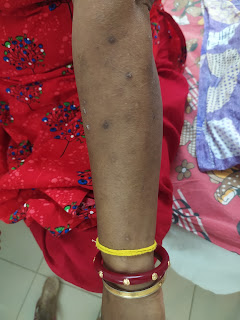
SYSTEMIC EXAMINATION
CNS EXAMINATION
HIGHER MENTAL FUNCTIONS:
Conscious, oriented to time place and person.
-Speech =Fluency, comprehension, repetition intact
-Memory =Recent, Remote, Immediate: Intact
CRANIAL NERVE EXAMINATION:
1st: Normal
2nd: visual acuity is normal
3rd, 4th, 6th: pupillary reflexes present.
EOM full range of motion present
5th: sensory intact
motor intact
7th: normal
8th: No abnormality noted.
9th,10th: palatal movements present and equal.
11th,12th: normal.
Motor examination:-
Bulk of muscle normal on both sides on inspection
Tone -
Right. Left
Upper limb. Normal. Normal
Lower limb. Normal. Normal
POWER-
Upper limbs +5 in all proximal and distal muscles
Lower limbs -
Rt LT
Iliopsoas- +5 +5
Adductor femoris +5 +5
Gluteus medius +5 +5
Gluteus maximus. +5 +5
Hamstrings +5 +5
Quadriceps +5 +5
Tibialis anterior - +5 +5
Gastrocnemius +5 + 5
Extensor hallucis longus. +5. +5
REFLEXES-
Right. Left
Biceps. ++ ++
Triceps. + + ++
Supinator. + +. ++
Knee. + +. ++
Ankle. + +. ++
Reflex video --
Sensory examination:
1.Spinothalamic: R L
Crude touch + +
Pain ++
2.Posterior column:
Fine touch + +
Vibration Normal
Position sense- normal
3.Cortical
Stereognosis: + +
Graphesthesia +. +
CEREBELLUM:
Finger nose and finger finger test were normal
No dyadiadokokinesia
No pendular knee jerk
Heel knee test: normal
Spine examination: -
No spine tenderness
Straight leg raising test- positive pain at 70° angle
Schober’s test-
Before-15cm
After bending-22cm


CVS:
Elliptical & bilaterally symmetrical chest
-No visible pulsations/engorged veins on the chest
-Apex beat seen in 5th intercostal space medial to mid clavicular line
-S1 S2 heard
-No murmurs
RESPIRATORY SYSTEM:
Upper respiratory tract normal
Lower respiratory tract:
-Trachea is central
-Movements are equal on both sides
-On percussion resonant on all areas
-Bilateral air entry equal
-Normal vesicular breath sounds heard
-No added sounds
-Vocal resonance equal on both sides in all areas.
PER ABDOMEN EXAMINATION --
Scaphoid
-No visible pulsations/engorged veins/sinuses
-Soft, non-tender, no guarding and rigidity, no organomegaly
-Bowel sounds heard
PROVISIONAL DIAGNOSIS: -
This is a case of lower back ache probably due to neural pain
CHIEF COMPLAINTS: -
- Known case of Hypothyroidism since 2008.
- Lower back pain extending from the base of the neck to the hip region since 2008.
History of present illness: -
In the year 2008, the patient has reported to be suffering from lower back pain which was extending from the base of the neck to the hip region. The onset of the pain was sudden, and its presence is continuous. The pain aggravates during the summer season and when the patient bends or sits on the floor to perform some household chores. The pain relieves when the patient is resting, during the winter season, exercising and gentle tugging of hair. The patient also reports experiencing insomnia at the same time. This incidence was seen in the patient's family history, where her mother, father, 2 brothers and one sister also suffered the same condition.
In the same year, the patient reports to be diagnosed of hypothyroidism. There was excessive hair loss and swelling on both lower limbs below the level of the knee were observed. The patient also experiences excessive thirst, drinking 5-6L of water on a daily basis. She started taking Eltroxin 50mcg in the year 2008. In 2015, she took Thyronorm 75 mcg. By the year 2022, she is taking Thyronorm 100 mcg.
History of past illness: -
The patient does not have any history of TB, DM, Epilepsy and asthma.
The patient has undergone gall bladder operation in 2016.
The patient experiences HTN from year 2015.
In 1997, the patient reports to have suffered from cerebral malaria. At the same time there was also swelling of the right arm, which reduced after administration of medications.
Personal history: -
Water intake: - 5-6L daily
Appetite: - normal
Diet: - normal
Bowel and bladder movement: - normal
Addictions: - none
Allergies: - none
Exercise status: - none
Menstrual History: - normal
[9:47 am, 22/09/2025] PPM 1: @PA please update their current weekly blood sugars and blood pressure as demonstrated here👇
Feel free to talk to our patient advocate @RS1 if necessary to understand better how to do it
[9:43 pm, 09/12/2025] PPM 1: Reviewed this patient too in the OPD since yesterday along with her daughter and husband. This is their second visit to our hospital and they had previously visited us thrice in Bhopal too
[8:36 am, 10/12/2025] PPM 1: Her current complaints were the same low backache she's been suffering since the last 3 decades every day 24 hours with intermittent exacerbations. On examination we found trunkal muscle weakness and abdominal obesity, mild hyperglycemia suggestive of metabolic syn and advised diet and exercises for reduction of trunkal fat and improvement of trunkal muscle power.
[7.42 pm, 17/01/2026] PPM 1: [09/12/2025, 21:43]: reviewed this patient too in the OPD since yesterday 8/12/25 along with her daughter and husband. This is their second visit to Narketpally and they had previously visited us thrice in Bhopal too
[10/12/2025, 08:36]: her current complaints were the same low backache she's been suffering since the last 3 decades every day 24 hours with intermittent exacerbations.
On examination we found trunkal muscle weakness and abdominal obesity, mild hyperglycemia suggestive of metabolic syn and advised diet and exercises for reduction of trunkal fat and improvement of trunkal muscle power
Today's update by the patient advocate:


[7.44 pm, 17/01/2026] PPM 1: Update today:
[17/01, 19:29] Patient advocate 48f: baa hat ta khub betha ghar theke suru kore puro hat
[17/01, 19:31] Patient Advocate 49F : 3 ta doctor dekhiyeche
[17/01, 19:31] Patient Adv 48F : Tao betha komche naaa
[8.02 pm, 17/01/2026] PPM 1: Looks like a lot of pharmacological management for pain when what she may have actually needed was non pharmacological management for what appears to be a muscle strain.
@PA can you show the exact location of the pain by using some pointers?
[8.07 pm, 17/01/2026] PPM 1: @PA you can make the pointers similar to how it has been demonstrated in the image here:👇
[8.39 PM, 17/01/2026] PA:

[9:37 pm, 17/01/2026] PPM 1: @PPM3 looking at the image due to suspect a rotator cuff issue to explain the current pain?
What would be the next steps to approach this issue?
[11:58 pm, 17/01/2026] PPM 3: Of course. Here is a reformed, general guide to approaching suspected rotator cuff pain.
### *A Step-by-Step Guide to Addressing Suspected Rotator Cuff Pain*
Given your description of pain that aligns with a potential rotator cuff issue (like pain with overhead movement, shoulder weakness, or night pain), here is a logical framework for how to proceed.
*Important:* This information is for educational purposes. A proper diagnosis requires an in-person evaluation by a qualified healthcare professional, such as a primary care physician, sports medicine doctor, orthopedic specialist, or physical therapist.
---
#### *Phase 1: Initial Assessment and Professional Diagnosis*
The first goal is to confirm the source of the pain, as other conditions (like arthritis, bursitis, or referred neck pain) can mimic rotator cuff problems.
1. *Clinical Examination:* A healthcare provider will:
* *Take a detailed history:* Discuss how the injury started, the specific movements that hurt, and the impact on your daily life.
* *Perform physical tests:* Check your shoulder's range of motion, strength, and perform specific orthopedic maneuvers to stress the rotator cuff tendons and reproduce your symptoms. This is often the most diagnostic part of the initial visit.
2. *Diagnostic Imaging (if needed):*
* *First-line:* An *X-ray* is often taken first to rule out arthritis, bone spurs, or other bony issues.
* *For soft tissue detail:* If a tear or severe tendinopathy is suspected, an *MRI* or *diagnostic Ultrasound* provides the best view of the tendons, muscles, and bursa to confirm the diagnosis and assess severity.
---
#### *Phase 2: Standard Treatment Pathway*
Treatment almost always begins with non-surgical (conservative) management, which is effective for the majority of cases.
1. *Immediate Self-Care (While Seeking Evaluation):*
* *Relative Rest:* Avoid activities that cause sharp pain (especially repetitive overhead work or lifting), but avoid complete immobilization to prevent stiffness.
* *Ice Application:* Apply an ice pack to the sorest part of the shoulder for 15-20 minutes, several times a day, to reduce inflammation.
* *Pain Management:* Over-the-counter anti-inflammatory medications (like ibuprofen or naproxen) can be used short-term, following package directions and if you have no contraindications.
2. *Structured Rehabilitation (The Cornerstone of Treatment):*
* *Physical Therapy:* A prescribed PT program is crucial. It typically focuses on:
* Restoring pain-free range of motion.
* Strengthening the rotator cuff and scapular stabilizer muscles.
* Improving shoulder mechanics and posture.
* A gradual return to sport or activity.
3. *Medical Interventions (if progress stalls):*
* *Corticosteroid Injection:* A targeted injection into the subacromial space (around the tendons) can provide significant short-term pain relief and reduce inflammation, allowing you to participate more effectively in physical therapy.
---
#### *Phase 3: Advanced Options (If Conservative Care is Insufficient)*
If several months (typically 3-6) of diligent physical therapy and other conservative measures do not provide adequate relief, further options may be discussed with a specialist.
* *Specialist Referral:* A consultation with an *orthopedic surgeon* who specializes in shoulders.
* *Further Interventions:* This may include discussion of procedures like:
* *Platelet-Rich Plasma (PRP) Injections* for chronic tendon issues.
* *Surgical Repair,* which may be considered for significant, acute tears in active individuals or for chronic tears that cause persistent weakness and have not responded to non-surgical care.
### *Your Action Plan Now*
1. *Document your symptoms:* Note what movements cause pain, when it's worst (e.g., at night), and any specific incidents of injury.
2. *Schedule an evaluation* with a primary care doctor, a sports medicine clinic, or a physical therapist (in some regions, you can see a PT directly).
3. *Begin initial modifications:* Use ice, modify painful activities, and avoid sleeping directly on the sore shoulder.
Following this structured approach—starting with an accurate diagnosis and committing to targeted rehabilitation—offers the best chance for a full recovery and return to pain-free activity.
[10.54 am, 18/01/2026] PPM 1: Thanks. Can you also share this in Bengali?
[10.59 am, 18/01/2026] PPM 3: অবশ্যই। সন্দেহজনক রোটেটার কাফ ব্যথার সাথে সামঞ্জস্যপূর্ণ সাধারণ নির্দেশিকা এখানে দেওয়া হলো।
### *সন্দেহজনক রোটেটার কাফ ব্যথা মোকাবেলার একটি ধাপে ধাপে নির্দেশিকা*
আপনার বর্ণিত লক্ষণগুলো (যেমন, ওভারহেড মুভমেন্টে ব্যথা, কাঁধে দুর্বলতা, বা রাতে ব্যথা) যদি সম্ভাব্য রোটেটার কাফ সমস্যার সাথে মিলে যায়, তাহলে এগোনোর যৌক্তিক কাঠামোটি এখানে দেওয়া হলো।
*গুরুত্বপূর্ণ:* এই তথ্যগুলো শুধুমাত্র শিক্ষামূলক উদ্দেশ্যে। সঠিক নির্ণয়ের জন্য একজন যোগ্য স্বাস্থ্যসেবা পেশাদার, যেমন প্রাথমিক চিকিৎসক, স্পোর্টস মেডিসিন বিশেষজ্ঞ, অর্থোপেডিক বিশেষজ্ঞ বা ফিজিওথেরাপিস্ট কর্তৃক সরাসরি মূল্যায়ন প্রয়োজন।
---
#### *পর্ব ১: প্রাথমিক মূল্যায়ন এবং পেশাদার নির্ণয়*
প্রথম লক্ষ্য হলো ব্যথার উৎস নিশ্চিত করা, কারণ অন্যান্য সমস্যা (যেমন, আর্থ্রাইটিস, বার্সাইটিস বা ঘাড় থেকে প্রেরিত ব্যথা) রোটেটার কাফের সমস্যার মতো লক্ষণ তৈরি করতে পারে।
১. *ক্লিনিকাল পরীক্ষা:* একজন স্বাস্থ্যসেবা প্রদানকারী নিম্নলিখিত কাজগুলো করবেন:
* *বিস্তারিত ইতিহাস নেবেন:* আঘাত কীভাবে শুরু হলো, কোন নির্দিষ্ট নড়াচড়ায় ব্যথা হয় এবং দৈনন্দিন জীবনে এর প্রভাব নিয়ে আলোচনা করা হবে।
* *শারীরিক পরীক্ষা করবেন:* আপনার কাঁধের নড়াচড়ার পরিসর, শক্তি পরীক্ষা করবেন এবং রোটেটার কাফ টেন্ডনগুলোতে চাপ দিয়ে আপনার লক্ষণগুলো পুনরায় প্রকাশ করার জন্য নির্দিষ্ট অর্থোপেডিক পরীক্ষা করবেন। প্রাথমিক ভিজিটের ক্ষেত্রে এটি প্রায়শই সবচেয়ে বেশি রোগ নির্ণয়মূলক অংশ।
২. *ডায়াগনস্টিক ইমেজিং (প্রয়োজনে):*
* *প্রথম ধাপ:* *এক্স-রে* প্রায়ই প্রথমে করা হয় আর্থ্রাইটিস, বোন স্পার বা অন্য কোনো হাড়ের সমস্যা বাদ দিতে।
* *সফট টিস্যুর বিস্তারিত বিবরণের জন্য:* যদি টিয়ার বা গুরুতর টেন্ডিনোপ্যাথি সন্দেহ করা হয়, তাহলে টেন্ডন, পেশী এবং বারসার সবচেয়ে ভালো দৃশ্য পেতে *এমআরআই* বা *ডায়াগনস্টিক আল্ট্রাসাউন্ড* করা হয়। এটি নির্ণয় নিশ্চিত করতে এবং তীব্রতা নির্ণয়ে সহায়তা করে।
---
#### *পর্ব ২: আদর্শ চিকিৎসা পদ্ধতি*
চিকিৎসা প্রায় সর্বদাই অ-সার্জিক্যাল (রক্ষণশীল) ব্যবস্থাপনা দিয়ে শুরু হয়, যা বেশিরভাগ ক্ষেত্রেই কার্যকর।
১. *তাত্ক্ষণিক স্ব-যত্ন (মূল্যায়ন নেওয়ার সময়ে):*
* *আপেক্ষিক বিশ্রাম:* তীক্ষ্ণ ব্যথা সৃষ্টিকারী কার্যকলাপ (বিশেষ করে বারবার ওভারহেড কাজ বা ওজন তোলা) এড়িয়ে চলুন, কিন্তু সম্পূর্ণ নিশ্চলতা এড়িয়ে চলুন যাতে জড়তা না আসে।
* *বরফ প্রয়োগ:* প্রদাহ কমাতে দিনে কয়েকবার, ১৫-২০ মিনিটের জন্য কাঁধের সবচেয়ে ব্যথার জায়গায় বরফের প্যাক দিন।
* *ব্যথা ব্যবস্থাপনা:* স্বল্পমেয়াদের জন্য ওভার-দ্য-কাউন্টার অ্যান্টি-ইনফ্লেমেটরি ওষুধ (যেমন আইবুপ্রোফেন বা ন্যাপ্রোক্সেন) ব্যবহার করা যেতে পারে, প্যাকেজের নির্দেশাবলী মেনে এবং আপনার কোনো নিষেধাজ্ঞা না থাকলে।
২. *কাঠামোগত পুনর্বাসন (চিকিৎসার ভিত্তি):*
* *ফিজিওথেরাপি:* একটি নির্দেশিত ফিজিওথেরাপি প্রোগ্রাম অত্যন্ত গুরুত্বপূর্ণ। এটি সাধারণত নিম্নলিখিত বিষয়গুলিতে মনোনিবেশ করে:
* ব্যথামুক্ত নড়াচড়ার পরিসর ফিরিয়ে আনা।
* রোটেটার কাফ এবং স্ক্যাপুলার স্টেবিলাইজার পেশীগুলোর শক্তি বাড়ানো।
* কাঁধের কার্যপ্রণালী এবং ভঙ্গি উন্নত করা।
* ক্রীড়া বা কার্যকলাপে ধীরে ধীরে ফিরে আসা।
৩. *চিকিৎসামূলক হস্তক্ষেপ (যদি উন্নতি স্থগিত থাকে):*
* *কর্টিকোস্টেরয়েড ইনজেকশন:* টেন্ডনের চারপাশের সাব-অ্যাক্রোমিয়াল স্পেসে একটি টার্গেটেড ইনজেকশন উল্লেখযোগ্য স্বল্পমেয়াদী ব্যথা উপশম দিতে এবং প্রদাহ কমাতে পারে, যা আপনাকে ফিজিওথেরাপিতে আরও কার্যকরভাবে অংশ নিতে দেয়।
---
#### *পর্ব ৩: উন্নত বিকল্প (যদি রক্ষণশীল চিকিৎসা যথেষ্ট না হয়)*
যদি কয়েক মাস (সাধারণত ৩-৬) নিয়মিত ফিজিওথেরাপি এবং অন্যান্য রক্ষণশীল ব্যবস্থা পর্যাপ্ত উপশম না দেয়, তাহলে একজন বিশেষজ্ঞের সাথে আরও বিকল্প নিয়ে আলোচনা হতে পারে।
* *বিশেষজ্ঞের কাছে রেফারাল:* কাঁধের বিশেষজ্ঞ একজন *অর্থোপেডিক সার্জন*-এর সাথে পরামর্শ।
* *অন্যান্য হস্তক্ষেপ:* এতে নিম্নলিখিত পদ্ধতি সম্পর্কে আলোচনা অন্তর্ভুক্ত থাকতে পারে:
* দীর্ঘস্থায়ী টেন্ডন সমস্যার জন্য *প্লেটলেট-রিচ প্লাজমা (পিআরপি) ইনজেকশন*।
* *সার্জিক্যাল মেরামত*, যা সক্রিয় ব্যক্তিদের মধ্যে উল্লেখযোগ্য, তীব্র টিয়ারের জন্য বা দীর্ঘস্থায়ী টিয়ারের জন্য বিবেচনা করা যেতে পারে যা দীর্ঘস্থায়ী দুর্বলতা সৃষ্টি করে এবং অ-সার্জিক্যাল চিকিৎসায় সাড়া দেয়নি।
### *আপনার এখনই করার জন্য কর্মপরিকল্পনা*
১. *আপনার লক্ষণগুলি লিখে রাখুন:* কোন নড়াচড়ায় ব্যথা হয়, কখন সবচেয়ে খারাপ হয় (যেমন, রাতে), এবং আঘাতের কোনো নির্দিষ্ট ঘটনা নোট করুন।
২. একজন প্রাথমিক চিকিৎসক, স্পোর্টস মেডিসিন ক্লিনিক বা একজন ফিজিওথেরাপিস্টের সাথে *মূল্যায়নের অ্যাপয়েন্টমেন্ট নিন* (কিছু অঞ্চলে, আপনি সরাসরি একজন ফিজিওথেরাপিস্টের কাছে যেতে পারেন)।
৩. *প্রাথমিক পরিবর্তন শুরু করুন:* বরফ ব্যবহার করুন, ব্যথাদায়ক কার্যকলাপ পরিবর্তন করুন এবং ব্যথাযুক্ত কাঁধের উপর সরাসরি ঘুমানো এড়িয়ে চলুন।
এই কাঠামোগত পদ্ধতি অনুসরণ করা—একটি সঠিক নির্ণয় দিয়ে শুরু করে এবং লক্ষ্যযুক্ত পুনর্বাসনে আত্মনিয়োগ করা—সম্পূর্ণ সেরে ওঠার এবং ব্যথামুক্ত কার্যকলাপে ফিরে আসার সর্বোত্তম সুযোগ দেয়।


[8:40 am, 20/01/2026] PA: Borof er sek dite hbe
[8:40 am, 20/01/2026] PA: Physio therapist dekhabo ajke
[8:41 am, 20/01/2026] PA: Koto din korte hbe


[9.04 pm, 27/02/2026] PPM 1: Patient update after a month of her first shoulder pain that was diagnosed here through AI driven team based learning as "Rotator cuff injury"
[27/02, 20:49] Patient Adv 48f body pain: Sir unar betha komche naa
[27/02, 20:50] patient advocate 48F body pain : Physiotherapy korte naa bole che beshi betha jonne
[27/02, 20:51] Patient Adv 48f body pain : Ei osudh gulo khache
[27/02, 20:51] Patient Adv 48F body pain : Komche na betha
[27/02, 20:52] Patient Adv 48F body pain: Amr mashi r o hate betha hoyechilo ei osudh ta kheye komeche maa k ki ei osudh ta khayano jabe?
[27/02, 20:56]hu2: Eta te kidney te problem hote pare.
@PaJR Health @PPM3 can you go through her entire record here: https://pajrcasereporter.blogspot.com/2025/12/48f-hypothyroid-neural-pain-20-years-wb.html?m=1 and provide your inputs on the best possible strategy from here?
[9:05 pm, 27/02/2026] PaJR Health: Based on the patient's update and her clinical history, here is a summary of the current situation and a recommended strategy for the patient advocate to discuss with her healthcare team.
*CLINICAL SUMMARY*
🔹 *Patient Profile:* 48F with a long history of Hypothyroidism (since 2008) and chronic neural/back pain.
🔹 *Current Issue:* Persistent shoulder pain (diagnosed as Rotator Cuff Injury) that has not improved after one month of treatment.
🔹 *Recent Update:* The patient is experiencing severe pain, leading to the suspension of physiotherapy. There is a request to use a medication that helped a relative, which has been flagged as a potential risk for kidney health.
*STRATEGY & RECOMMENDATIONS*
💡 *1. MEDICATION SAFETY FIRST*
It is critical *not* to give the patient the medication used by her relative without a doctor's prescription. Many pain medications (specifically NSAIDs like Diclofenac or Ibuprofen) can cause significant kidney strain, especially in patients with long-term conditions like hypothyroidism or hypertension. As noted in the chat, this could lead to serious complications.
💡 *2. ADDRESSING REFRACTORY PAIN*
Since the pain is "not decreasing" (Komche na betha) and is severe enough to stop physiotherapy, the current management plan needs escalation:
* *Pain Management Review:* The patient may require a different class of analgesics or a short course of anti-inflammatory medication that is safer for her renal profile.
* *Imaging Update:* If a month of conservative management (rest/meds) has failed, an Ultrasound or MRI of the shoulder may be necessary to rule out a full-thickness tear or "Frozen Shoulder" (Adhesive Capsulitis), which is common in patients with endocrine issues like hypothyroidism.
💡 *3. PHYSIOTHERAPY MODIFICATION*
Physiotherapy should not be "forced" if the pain is acute. The strategy should shift to:
* *Pain-Free Range of Motion:* Gentle passive movements rather than active strengthening until the inflammation subsides.
* *Modalities:* Using heat or cold therapy as recommended by the therapist to manage local inflammation.
💡 *4. HYPOTHYROIDISM & PAIN LINK*
Hypothyroidism can often complicate recovery from tendon injuries and increase the perception of neural pain. It is important to ensure her TSH levels are currently optimized (her last log indicated she was on 100mcg Thyronorm).
*NEXT STEPS FOR THE ADVOCATE*
1. *Consult the Physiotherapist today:* Ask for a "gentle" assessment focusing on pain relief rather than exercise.
2. *Doctor Consultation:* Present the list of current medications she is taking (from the photo provided in the log) and ask for a "renal-safe" alternative for pain.
3. *Do not use the relative's medicine:* Reinforce that what works for one person may be dangerous for another due to different kidney functions.
*RELEVANT RECORDS*
📋 48F Hypothyroid Neural pain 20 years WB PaJR
💡 I have reviewed the patient's 20-year history of neural pain and hypothyroidism. The current shoulder pain requires a cautious approach to medication to protect her kidney health while addressing the lack of progress over the last month.
[9:07 pm, 27/02/2026] PPM 1: Please translate to Bengali as well
[9:07 pm, 27/02/2026] PaJR Health: রোগীর বর্তমান অবস্থা এবং তার পূর্বের চিকিৎসার ইতিহাস বিবেচনা করে, নিচে একটি সারসংক্ষেপ এবং পরবর্তী পদক্ষেপের পরিকল্পনা দেওয়া হলো যা আপনি ডাক্তার বা ফিজিওথেরাপিস্টের সাথে আলোচনা করতে পারেন।
*ক্লিনিকাল সারসংক্ষেপ (CLINICAL SUMMARY)*
🔹 *রোগীর প্রোফাইল:* ৪৮ বছর বয়সী মহিলা, ২০০৮ সাল থেকে হাইপোথাইরয়েডিজম (Hypothyroidism) এবং দীর্ঘস্থায়ী স্নায়বিক/পিঠের ব্যথায় ভুগছেন।
🔹 *বর্তমান সমস্যা:* কাঁধে দীর্ঘস্থায়ী ব্যথা (রোটেটর কাফ ইনজুরি), যা এক মাসের চিকিৎসাতেও কমেনি।
🔹 *সাম্প্রতিক আপডেট:* ব্যথার তীব্রতার কারণে ফিজিওথেরাপি বন্ধ রাখা হয়েছে। আত্মীয়ের ব্যবহৃত একটি ওষুধ ব্যবহারের কথা ভাবা হচ্ছে, যা কিডনির জন্য ঝুঁকিপূর্ণ হতে পারে।
*কৌশল ও পরামর্শ (STRATEGY & RECOMMENDATIONS)*
💡 *১. ওষুধের নিরাপত্তা সবার আগে (MEDICATION SAFETY)*
ডাক্তারের পরামর্শ ছাড়া আত্মীয়ের ব্যবহৃত কোনো ওষুধ রোগীকে দেবেন না। অনেক ব্যথানাশক ওষুধ (যেমন ডাইক্লোফেনাক বা আইবুপ্রোফেন) কিডনির ওপর মারাত্মক চাপ সৃষ্টি করতে পারে, বিশেষ করে যাদের হাইপোথাইরয়েডিজম বা উচ্চ রক্তচাপের মতো সমস্যা আছে। এটি বড় ধরনের শারীরিক জটিলতা তৈরি করতে পারে।
💡 *২. দীর্ঘস্থায়ী ব্যথার সমাধান (ADDRESSING REFRACTORY PAIN)*
যেহেতু এক মাসেও ব্যথা কমছে না এবং ফিজিওথেরাপি করা যাচ্ছে না, তাই চিকিৎসার পরিকল্পনা পরিবর্তন করা প্রয়োজন:
* *ব্যথা নিয়ন্ত্রণ:* রোগীকে এমন ওষুধ দেওয়া প্রয়োজন যা তার কিডনির জন্য নিরাপদ।
* *পরীক্ষা-নিরীক্ষা:* এক মাস বিশ্রামের পরেও উন্নতি না হলে কাঁধের আল্ট্রাসাউন্ড বা এমআরআই (MRI) করা প্রয়োজন হতে পারে, যাতে দেখা যায় কোনো বড় ধরনের টিয়ার (Tear) বা 'ফ্রোজেন শোল্ডার' (Frozen Shoulder) হয়েছে কি না।
💡 *৩. ফিজিওথেরাপিতে পরিবর্তন (PHYSIOTHERAPY MODIFICATION)*
তীব্র ব্যথার সময় জোর করে ব্যায়াম করা উচিত নয়। এর পরিবর্তে:
* *আরামদায়ক মুভমেন্ট:* পেশি শক্ত করার ব্যায়ামের বদলে হালকা নাড়াচাড়া করা উচিত।
* *হিট/কোল্ড থেরাপি:* থেরাপিস্টের পরামর্শ অনুযায়ী গরম বা ঠান্ডা সেঁক দেওয়া যেতে পারে।
💡 *৪. থাইরয়েড ও ব্যথার সম্পর্ক (HYPOTHYROIDISM & PAIN LINK)*
হাইপোথাইরয়েডিজম থাকলে অনেক সময় চোট সারতে দেরি হয় এবং ব্যথা বেশি অনুভূত হয়। বর্তমানে তার থাইরয়েড (TSH) লেভেল নিয়ন্ত্রণে আছে কি না তা পরীক্ষা করা জরুরি।
*অ্যাডভোকেটের জন্য পরবর্তী পদক্ষেপ (NEXT STEPS)*
১. *আজই ফিজিওথেরাপিস্টের সাথে কথা বলুন:* তাকে জানান যে ব্যথার কারণে ব্যায়াম করা যাচ্ছে না এবং ব্যথামুক্ত উপায়ে থেরাপি দেওয়া সম্ভব কি না তা জানতে চান।
২. *ডাক্তারের পরামর্শ নিন:* বর্তমানে রোগী যে ওষুধগুলো খাচ্ছেন তার তালিকা ডাক্তারকে দেখান এবং কিডনির জন্য নিরাপদ কোনো ব্যথানাশক ওষুধের কথা জিজ্ঞাসা করুন।
৩. *অন্যের ওষুধ ব্যবহার করবেন না:* মনে রাখবেন, একজনের জন্য যে ওষুধ কাজ করে, তা অন্যের কিডনির অবস্থার ওপর ভিত্তি করে বিপজ্জনক হতে পারে।
*প্রাসঙ্গিক রেকর্ড (RELEVANT RECORDS)*
📋 48F Hypothyroid Neural pain 20 years WB PaJR
💡 আমি রোগীর ২০ বছরের চিকিৎসার ইতিহাস পর্যালোচনা করেছি। গত এক মাসে কাঁধের ব্যথার উন্নতি না হওয়ায় এবং কিডনির সুরক্ষার কথা মাথায় রেখে ওষুধের বিষয়ে অত্যন্ত সতর্ক থাকা প্রয়োজন।

[12:22 pm, 28/02/2026] PPM 1: Today's update:
@PaJR Health please translate
[27/02, 21:18]hu2: Byatha ta kothai ekta chobi tule pathan
Goto ek maash protidin byatha kemon chilo sokal theke raat obdhi ektu details janaben
[28/02, 11:59] Patient Adv 48F: Sara hat ta jinjin kore
[28/02, 12:00] Patient Adv 48f: Ei jay ga ta betha
[28/02, 12:19]hu2: Haather konui a byatha?
Konuier bhitor deek na bairer deeke byatha ta?
Sokal theke raat obdhi ghontai ghontai uni ki ki koren ebong kone ghontai aei byatha ta ter paan.
[12:24 pm, 28/02/2026] PaJR Health: Based on the latest updates from the patient advocate and the clinical team, here is the translation and a summary of the current clinical inquiry:
*TRANSLATION OF TODAY'S UPDATE*
[27/02, 21:18] *hu2:* "Please take a photo and send it, showing exactly where the pain is. Also, please provide details on how the pain has been every day from morning to night over the past month."
[28/02, 11:59] *Patient Adv 48F:* "The entire arm feels a tingling/numbness (jinjin kore)."
[28/02, 12:00] *Patient Adv 48f:* "The pain is in this specific area [referring to the photo/location]."
[28/02, 12:19] *hu2:* "Is the pain in the elbow? Is it on the inner side or the outer side of the elbow? Please describe her hourly activities from morning to night and at which specific hours she feels this pain the most."
*CLINICAL INSIGHTS & NEXT STEPS*
💡 *1. CHANGE IN SYMPTOMS (TINGLING/NUMBNESS)*
The report of "jinjin kore" (tingling/numbness) throughout the arm is a significant update. While the initial diagnosis was a rotator cuff injury, tingling suggests *nerve involvement*. This could be:
* *Cervical Radiculopathy:* A pinched nerve in the neck (consistent with her 20-year history of neck/back pain).
* *Peripheral Nerve Compression:* Such as Ulnar or Radial nerve issues if the pain is localized around the elbow.
💡 *2. ELBOW LOCALIZATION*
The focus on the elbow (inner vs. outer) helps differentiate between conditions like "Tennis Elbow" (Lateral Epicondylitis) or "Golfer's Elbow" (Medial Epicondylitis), which can sometimes mimic or coexist with shoulder injuries.
💡 *3. ACTIVITY-PAIN CORRELATION*
Tracking the pain hour-by-hour is essential. If the pain is worse at night or after specific household chores, it confirms an inflammatory or mechanical trigger.
*ACTION REQUIRED FOR THE ADVOCATE*
🔹 *Clarify the Location:* Confirm if the pain is on the "bairer deek" (outer side) or "bhitor deek" (inner side) of the elbow.
🔹 *Daily Log:* Please list her main activities today (e.g., cooking, resting, lifting) and note the pain level (1-10) for each hour.
🔹 *Check Neck Movement:* Does moving her neck increase the tingling in her arm? This will help the team determine if the source is the neck or the shoulder/elbow.
💡 I am monitoring these new neurological symptoms (tingling) closely, as they may require a shift in the management strategy from a simple muscle injury to a nerve-focused evaluation.
[12:25 pm, 28/02/2026] PPM 1: Please translate to Bengali
[12.25 pm, 28/02/2026] PaJR Health: পেশেন্ট অ্যাডভোকেট এবং ক্লিনিকাল টিমের আজকের কথোপকথনের অনুবাদ এবং বর্তমান পরিস্থিতির বিশ্লেষণ নিচে দেওয়া হলো:**আজকের আপডেটের অনুবাদ (TRANSLATION)**
[২৭/০২, ২১:১৮] **hu2:** "ব্যথাটা ঠিক কোথায় হচ্ছে তার একটা ছবি তুলে পাঠান। গত এক মাস ধরে প্রতিদিন সকাল থেকে রাত পর্যন্ত ব্যথা কেমন ছিল, তার একটু বিস্তারিত জানাবেন।"
[২৮/০২, ১১:৫৯] **পেশেন্ট অ্যাডভোকেট ৪৮F:** "সারা হাতটা ঝিনঝিন করে।"
[২৮/০২, ১২:০০] **পেশেন্ট অ্যাডভোকেট ৪৮F:** "এই জায়গাটাতে ব্যথা [ছবির জায়গাটি নির্দেশ করে]।"
[২৮/০২, ১২:১৯] **hu2:** "ব্যথাটা কি হাতের কনুইতে? কনুইয়ের ভেতরের দিকে না কি বাইরের দিকে ব্যথা? সকাল থেকে রাত পর্যন্ত উনি প্রতি ঘণ্টায় কী কী করেন এবং ঠিক কোন সময়ে ব্যথাটা সবচেয়ে বেশি অনুভব করেন, তা জানান।"
**ক্লিনিকাল বিশ্লেষণ এবং পরবর্তী পদক্ষেপ (CLINICAL INSIGHTS)**
💡 **১. উপসর্গের পরিবর্তন (ঝিনঝিন করা)**
সারা হাত "ঝিনঝিন" করার বিষয়টি একটি গুরুত্বপূর্ণ আপডেট। শুরুতে এটিকে রোটেটর কাফ ইনজুরি (কাঁধের সমস্যা) মনে করা হলেও, ঝিনঝিন করার অর্থ হলো **স্নায়ুর (nerve) সমস্যা** থাকতে পারে। এটি হতে পারে:
* **সার্ভিকাল রেডিকুলোপ্যাথি:** ঘাড়ের কোনো স্নায়ু চেপে যাওয়া (যা উনার ২০ বছরের ঘাড় ও পিঠের ব্যথার ইতিহাসের সাথে সামঞ্জস্যপূর্ণ)।
* **পেরিফেরাল নার্ভ কমপ্রেশন:** কনুইয়ের আশেপাশে কোনো স্নায়ু চেপে যাওয়া।
💡 **২. কনুইয়ের ব্যথার অবস্থান**
ব্যথা কনুইয়ের ভেতরের দিকে না কি বাইরের দিকে, তা জানা খুব জরুরি। এটি "টেনিস এলবো" (বাইরের দিকে ব্যথা) বা "গলফার্স এলবো" (ভেতরের দিকে ব্যথা) কি না তা বুঝতে সাহায্য করবে।
💡 **৩. কাজের সাথে ব্যথার সম্পর্ক**
প্রতি ঘণ্টার কাজের তালিকা তৈরি করা প্রয়োজন। যদি রাতে বা নির্দিষ্ট কোনো ঘরের কাজের পর ব্যথা বাড়ে, তবে সেটি প্রদাহ বা যান্ত্রিক কোনো সমস্যার ইঙ্গিত দেয়।
**অ্যাডভোকটের জন্য প্রয়োজনীয় পদক্ষেপ (ACTION REQUIRED)**
🔹 **ব্যথার সঠিক জায়গা:** নিশ্চিত করুন ব্যথা কনুইয়ের "বাইরের দিকে" না কি "ভেতরের দিকে"।
🔹 **দৈনিক লগ:** আজ উনি কী কী কাজ করেছেন (যেমন- রান্না করা, বিশ্রাম, ভারী কিছু তোলা) এবং প্রতি ঘণ্টায় ব্যথার মাত্রা (১-১০ এর মধ্যে) কত ছিল তা জানান।
🔹 **ঘাড়ের মুভমেন্ট:** ঘাড় নাড়ালে কি হাতের ঝিনঝিন ভাব বেড়ে যায়? এটি পরীক্ষা করে জানালে টিমের জন্য সুবিধা হবে।
💡 আমি এই নতুন স্নায়বিক উপসর্গগুলো (ঝিনঝিন করা) নিবিড়ভাবে পর্যবেক্ষণ করছি, কারণ এটি সাধারণ পেশির চোটের বদলে স্নায়ু-কেন্দ্রিক চিকিৎসার প্রয়োজন হতে পারে।
